

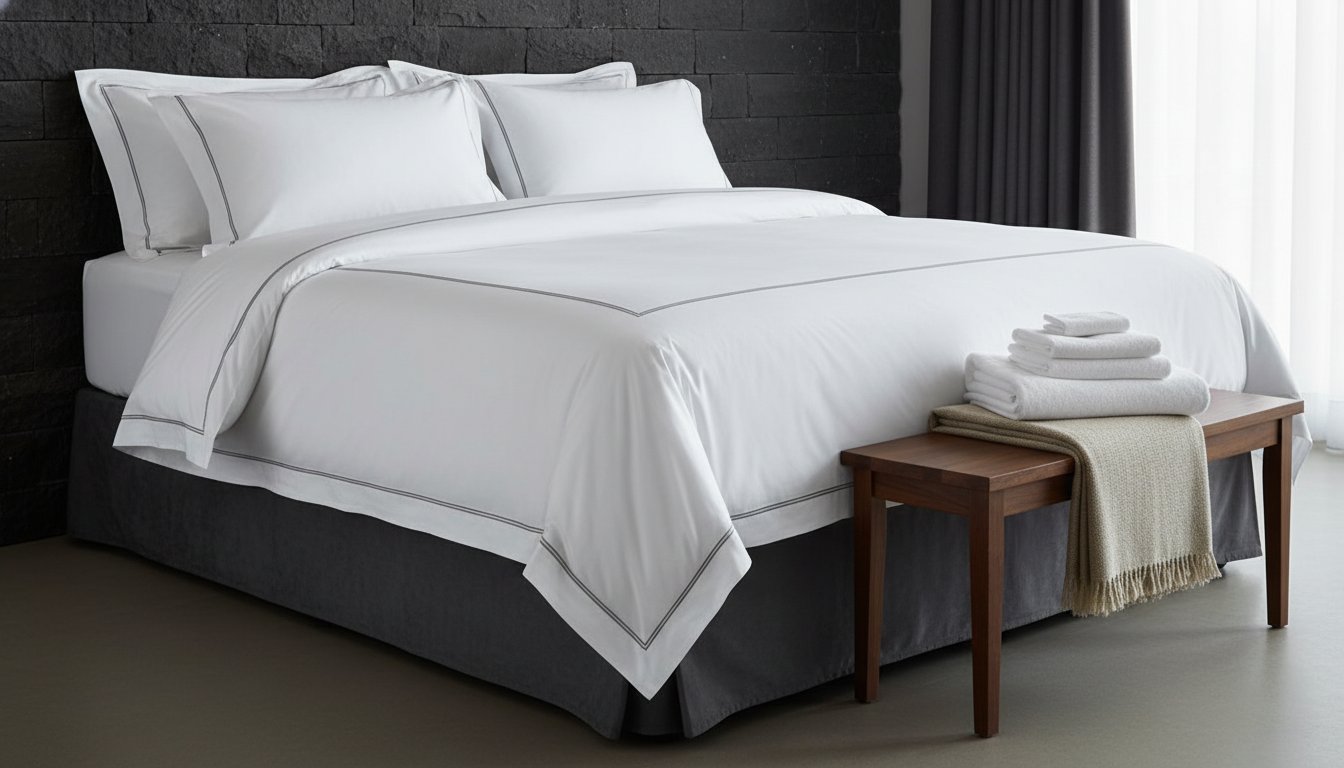
The Essential Procurement Guide for Hospitality Textiles in 2026
Title: Essential Procurement Guide for Hospitality Textiles 2026 | Linen and Co
Meta Description: Master the balance of guest comfort and durability with our 2026 hospitality textile procurement guide. Source local, made-to-order linens in South Africa.
URL Slug: procurement-guide-hospitality-textiles-2026
Your guests' first impression isn't the view from the balcony; it's the weight and texture of the linens they touch the moment they arrive. In South Africa’s R200 billion hospitality market, many buyers struggle with linens that grey or shrink after just a few industrial washes. Waiting months for international shipments only to receive the wrong size is a frustration you shouldn't have to face. You know that maintaining a premium guest experience requires more than just high thread counts; it demands consistency and reliability.
This procurement guide for hospitality textiles will help you master the balance between sensory luxury and the industrial resilience needed for 2026. You'll learn how to secure a durable par stock that survives the rigours of commercial laundering without sacrificing that soft, artisanal feel. We'll explore how local, made-to-order craftsmanship ensures your property stays stocked with precise sizes like Super King XL whilst avoiding the 45% import duties often levied by SARS on foreign textiles. By the end, you'll have a clear roadmap for building a local supply chain that prioritises both guest comfort and operational efficiency.
Key Takeaways
- Understand why textiles are the most frequent physical touchpoint for your guests and how to source materials that evoke a sense of sanctuary whilst enduring industrial wear.
- Use this procurement guide for hospitality textiles to move beyond the thread count myth, selecting weaves like 200TC Percale that offer superior longevity in high-turnover environments.
- Resolve sizing challenges for unique South African lodge beds by utilising made-to-order services for specialised dimensions such as 3/4 XL and Super King XL.
- Streamline your operations with a local supply chain that provides 3-14 working day lead times and bespoke branding options without the burden of international shipping delays.
- Learn the practical benefits of hospitality-first construction details, such as flap closures and four-corner elastic, designed to improve housekeeping efficiency and guest comfort.
Understanding the Strategic Role of Textiles in Hospitality Procurement
In the hospitality sector, the procurement process involves far more than just ordering supplies; it's the strategic sourcing of every bed, bath, and table linen that enters your property. Textiles are the most frequent physical touchpoint for guests during their stay. From the moment they wrap themselves in a bathrobe to the hours spent between duvet covers, your fabric choices silently communicate your brand's standards. Since the South African hospitality market is projected to reach approximately R360 billion by 2032, making informed choices now is vital for long-term profitability and reputation.
This procurement guide for hospitality textiles helps shift your mindset from reactive buying to proactive par stock management. Reactive buying often leads to rushed decisions and mismatched sets. Proactive management ensures you maintain a healthy par stock, which protects your investment by allowing linens to "rest" between industrial wash cycles. We define this approach as "Value-Conscious Luxury." It's the art of balancing the sensory experience guests expect with the economical durability required for high-traffic environments. True luxury in a hotel setting shouldn't be a rare indulgence; it's an everyday experience built on reliability and comfort.
The Impact of Textile Quality on Guest Experience
Guests spend roughly 30% to 50% of their stay in direct contact with your textiles. The "hand-feel" of a 200TC Polycotton Percale or a 300TC Cotton Percale influences their perceived value of the entire room. Percale refers to a closely woven, plain-weave fabric that feels crisp, cool, and breathable against the skin. Psychologically, crisp white linens signal hygiene and sanctuary. When a guest finds smooth, pristine fabric, it reinforces their trust in your property's care standards. Consistency is essential. Whether you manage one boutique lodge or a portfolio of guesthouses, your guests expect the same meticulous quality in every room.
Lifecycle Cost vs Unit Price: An Economical Approach
Many buyers fall into the trap of choosing textiles based solely on the lowest unit price. However, value-conscious procurement looks at the lifecycle cost. Lifecycle cost is the total expenditure on a textile over its useful lifespan in a high-traffic environment. Choosing "economical" imports might seem attractive initially, but these items often fail to meet commercial laundering compatibility, leading to premature greying or fraying.
- Durability: Hospitality-grade linens are designed to withstand high-temperature washes and industrial pressing.
- Local Advantage: With SARS levying up to 45% import duties on foreign textiles as of May 2026, sourcing locally avoids hidden costs and shipping delays.
- Replacement Rates: A durable local product that lasts 200 cycles is far more cost-effective than a cheaper alternative that needs replacing after 50.
Investing in locally manufactured textiles ensures your supply chain remains reliable whilst supporting South African craftsmanship. By prioritising quality over the initial price tag, you secure a more stable and professional operation.
Navigating Technical Specifications: Beyond the Thread Count Myth
A common misconception in textile sourcing is that a higher thread count automatically equates to better quality. In a residential setting, a 600TC sateen sheet feels indulgent, but in a professional environment, it's often a liability. Thread count is simply the number of horizontal and vertical threads woven into one square inch of fabric. When these numbers climb too high, manufacturers often use thinner, multi-ply yarns that lack the structural integrity to survive the high-heat cycles of a commercial laundry. This procurement guide for hospitality textiles prioritises fabric strength and breathability over marketing-driven figures.
For most South African properties, the sweet spot lies between 200 and 300 threads per inch. Organisations like the Textile Rental Services Association highlight that the weave type is just as critical as the count itself. Whilst sateen offers a lustrous sheen, its "four-over-one-under" weave leaves long surface threads exposed to snagging. Percale, with its "one-over-one-under" structure, creates a tight, matte finish that remains crisp and durable wash after wash.
Polycotton vs Pure Cotton: Choosing the Right Blend
The 200TC Polycotton Percale is widely regarded as the workhorse of the local industry. By blending cotton with polyester, you gain a fabric that dries faster, creases less, and resists the abrasive nature of industrial chemicals. This makes it an exceptionally value-conscious choice for high-occupancy hotels. However, for premium suites or boutique lodges where guest comfort is the ultimate priority, a 300TC Cotton Percale offers unparalleled breathability and a cooling, artisanal feel. If you're unsure which fabric suits your specific guest profile, you can request fabric samples to experience the tactile difference firsthand.
The Percale Advantage for Commercial Laundering
Percale’s plain-weave construction is intentionally designed for longevity. Its matte finish doesn't just look sophisticated; it hides the minor wear that naturally occurs over hundreds of laundering cycles. Unlike sateen, which can pill and lose its lustre, percale actually softens over time whilst maintaining its shape. This durability is essential when maintaining a consistent aesthetic in standard hospitality colours such as White, Cream, Stone, Grey, and Duck Egg.
This technical resilience extends to bath linens too. Professional snag-free hospitality towels use a specific warp-knit construction that prevents the unsightly pulled loops common in domestic products. By choosing textiles engineered for the rigours of the trade, you ensure your rooms always look meticulously curated, regardless of how many times the linens have been through the press.
Sizing and Operational Requirements for the South African Market
South African hospitality properties often feature bespoke furniture that doesn't adhere to standard retail dimensions. When sourcing for lodges or boutique guesthouses, a generic procurement guide for hospitality textiles may overlook the nuances of local bed sizing. Using off-the-shelf linens on a 3/4 XL or Super King XL mattress leads to unsightly bunching or exposed corners; this instantly detracts from the sense of sanctuary you've worked hard to create. Precise fit is the foundation of a professional guest experience.
Navigating XL Bedding and Industry-Exclusive Sizes
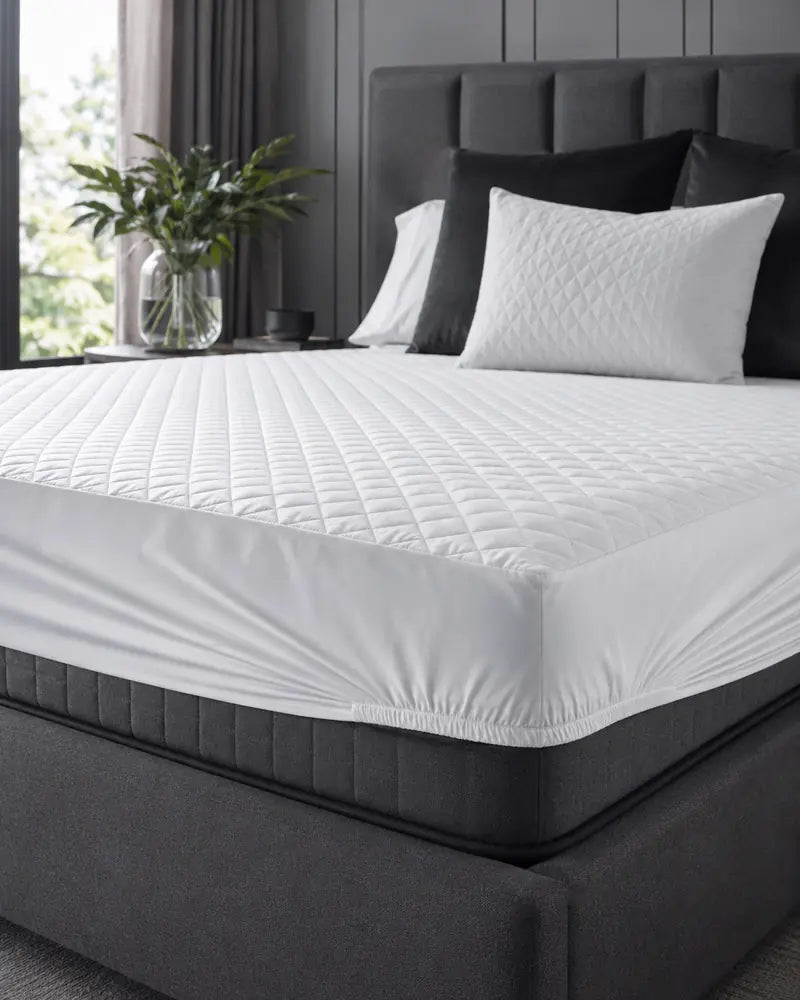
Modern South African hospitality often utilises Extra Long (XL) mattresses, measuring 200cm in length compared to the standard 188cm. Sourcing 3/4 XL or Super King XL bedding is often a challenge through traditional retail channels. To ensure a professional finish, your procurement strategy must account for both surface area and mattress depth. We recommend extra-depth fitted sheets to comfortably accommodate quilted mattress protectors without straining the fabric. The following table outlines the specific dimensions required for a meticulous finish in the local market.
| Bed Size | Mattress Dimension (cm) | Recommended Sheet Type |
|---|---|---|
| Single XL | 91 x 200 | Extra Depth Fitted |
| Three Quarter XL | 107 x 200 | Hospitality 3/4 XL |
| Queen XL | 152 x 200 | Extra Depth Fitted |
| King XL | 183 x 200 | Hospitality King XL |
| Super King XL | 200 x 200 | Bespoke Super King |
Par Stock Management and Operational Efficiency
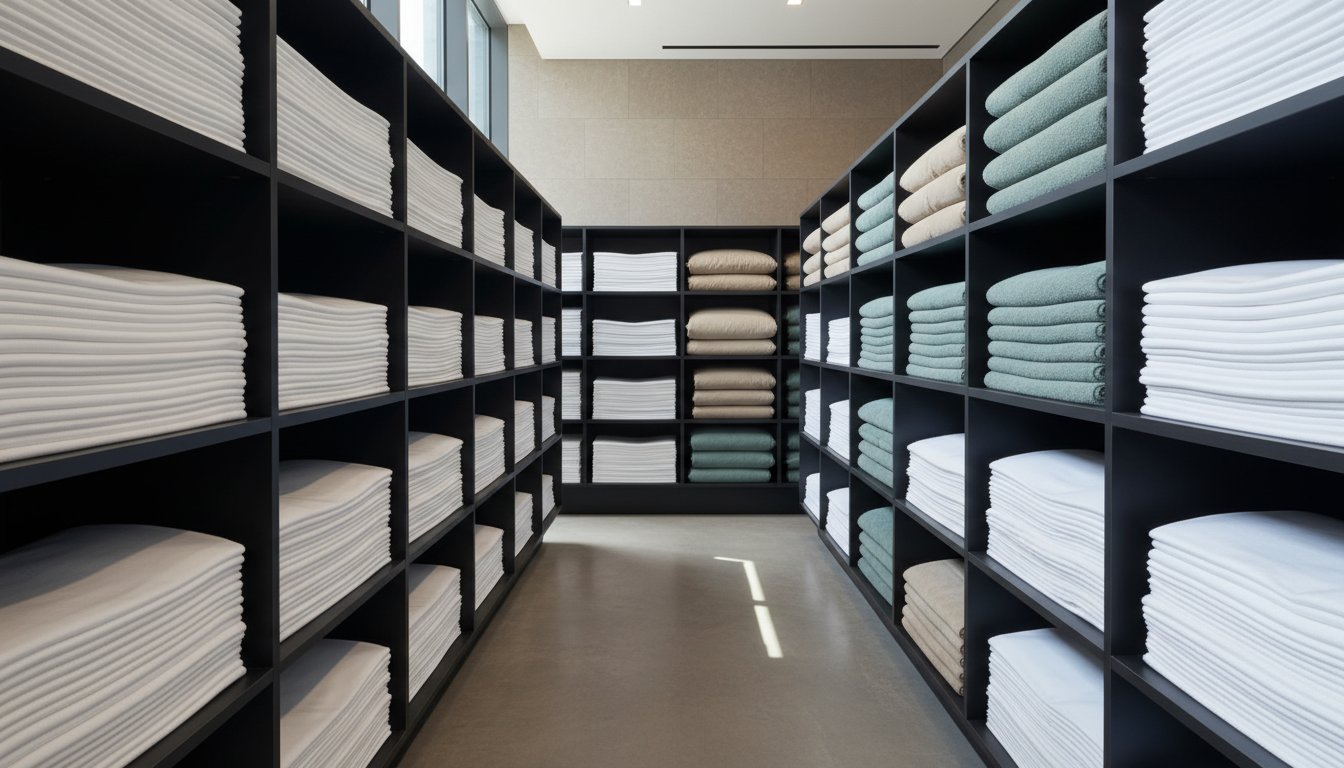
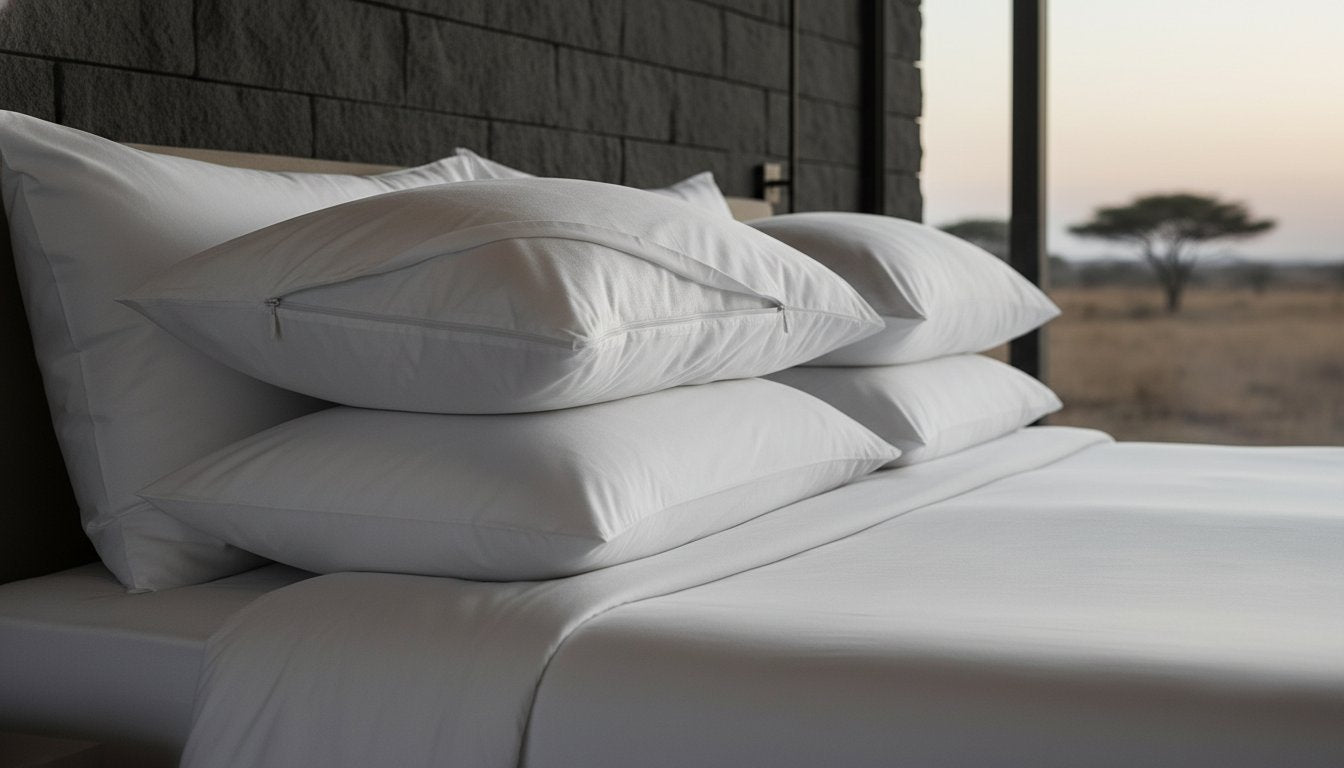
A reliable Hotel Textile Supplier Selection Guide emphasises the 3:1 par stock ratio. This industry standard, one set on the bed, one in the wash, and one in the cupboard, is essential for maintaining the longevity of your investment. It allows fibres to recover between uses, which is particularly important for high-quality Cotton Percale. Efficiency is further enhanced by construction details like flap closures for pillowcases, which avoid the breakages common with buttons, and four-corner elastic on fitted sheets for faster room turnovers.
LinenCo’s made-to-order model supports this strategy by allowing you to top up inventory as needed without minimum order requirements. Because items are crafted specifically for your property, lead times range from 3 to 14 working days. If you require personalised embroidery, please allow an additional 1 to 2 weeks for production. Full payment is required before manufacturing begins; because these items are tailored to your specific sizing and branding, they are non-returnable once the process has commenced. Whilst we don't offer fixed laundering-cycle guarantees, choosing the right technical specifications will significantly extend the lifespan of your par stock.

The Made-to-Order Advantage: Customisation and Branding
Mass-produced linens often feel anonymous; they lack the soul of a space intended as a sanctuary. In an era where guest loyalty is built on the strength of small, sensory details, made-to-order manufacturing offers a significant strategic advantage. This procurement guide for hospitality textiles emphasises that bespoke production isn't just about fit; it's about the artisanal quality that comes from meticulous, local craftsmanship. By choosing a made-to-order model, you ensure that every item, from 200TC Polycotton Percale duvet covers to velour bathrobes, is crafted specifically for your property’s unique requirements.
This approach allows for a level of customisation that generic imports simply can't match. Whether you need a specific flap closure on a pillowcase or a non-standard hem on a tablecloth, local production provides the flexibility to adapt. It's important to remember that because these items are tailored to your specifications, they are non-returnable once production has commenced. This policy ensures that the integrity of our artisanal process remains uncompromised for every client.
Custom Embroidery and Monogramming
Branding transforms a functional textile into a bespoke guest experience. Adding a meticulously stitched logo to your towels or pillowcases creates a sense of heritage and prestige that guests remember. This process requires precision and care to ensure the embroidery remains crisp throughout hundreds of laundering cycles. Whilst our standard production lead time is 3 to 14 working days, personalised branding requires an additional 1 to 2 weeks for setup and execution. This small extension in the timeline is what elevates a room from a standard stay to a branded sanctuary. To begin your property's transformation, you can request a custom embroidery quote and share your digital logo files with our team.
Managing Lead Times and Production Schedules
Effective procurement requires a calm, forward-thinking approach to inventory. We advise procurement managers to audit their par stocks at least six weeks before peak South African tourism seasons to account for manufacturing windows. Because LinenCo operates without minimum order requirements, you can easily replenish specific items without the burden of excessive upfront inventory. Full payment is required before production begins to secure your slot in the manufacturing schedule. This ensures your order moves seamlessly from the cutting table to the final quality check within the promised 14-working-day window, providing you with a reliable and predictable supply chain.
Selecting a Long-Term Partner: Why Local Manufacturing Wins
Choosing a procurement partner is a decision that resonates through every guest stay and operational budget. Whilst international markets offer vast choices, the uncertainty of global shipping and the complexity of import regulations often disrupt the serenity of a well-managed property. As of May 2026, South African Revenue Service (SARS) duties on imported textiles remain as high as 45%, making local sourcing not just an ethical choice but a financially astute one. This procurement guide for hospitality textiles advocates for a shift towards local manufacturing, where the inherent advantages of domestic production ensure a reliable and transparent supply chain throughout the country.
By partnering with a local specialist, you move away from the high-pressure, reactive cycles of mass retail. Instead, you embrace a "slow-living" philosophy that prioritises enduring value over temporary fixes. Investing in high-quality, locally crafted linens means your par stock remains consistent in colour and and texture year after year. This reliability allows you to focus on the artisanal details of your guest experience, confident that your 200TC Polycotton Percale or 300TC Cotton Percale essentials are only a few working days away from replenishment.
The Linen and Co Consultative Approach
We believe that luxury is a personal experience, which is why our service is rooted in expert-led consultation rather than simple transactions. Whether you're an interior designer outfitting a new boutique lodge or a luxury residential buyer seeking a sanctuary at home, our team provides meticulous sizing assistance to ensure a perfect fit. We offer fabric samples to help you navigate the tactile differences between our weaves. This consultative support is vital for new properties establishing their first par stocks. Remember that our items are made-to-order with lead times of 3 to 14 working days, plus an additional 1 to 2 weeks for custom embroidery. Because we tailor every piece to your specific requirements, full payment is required before production begins, and items are non-returnable once the process has commenced.
Sustainable and Ethical Sourcing in South Africa
There is a profound sense of pride in South African craftsmanship. By sourcing locally, you support ethical manufacturing practices and contribute to the growth of our domestic textile industry. Whilst we don't claim unverified global certifications, our quality is verified daily through rigorous commercial use in some of the country's most prestigious properties. We treat every seam and every hem as a marker of our heritage. Our commitment is to provide you with textiles that are breathable, timeless, and resilient. It's a partnership built on trust, quality, and the shared belief that luxury should be an everyday experience. Designed for comfort, crafted for life.
Securing the Future of Your Guest Experience
Mastering your property's linen strategy is about more than just aesthetics; it's a commitment to the guest's sensory experience and your operational longevity. By prioritising technical specifications like the 200TC Percale weave over inflated thread counts, you ensure your linens withstand the rigours of commercial laundering whilst maintaining a soft, artisanal feel. This procurement guide for hospitality textiles has highlighted how local, made-to-order manufacturing allows you to bypass high import duties and secure precise fits for industry-exclusive sizes like Super King XL.
Choosing a partner who understands the South African landscape means you benefit from reliable 3 to 14 working day lead times and the ability to replenish par stocks with no minimum order requirements. It's an approach that values meticulously crafted quality over mass-produced convenience. Whether you're refining a boutique lodge or a luxury residence, our focus remains on providing everyday luxury that is designed for comfort and crafted for life.
Take the next step towards a more resilient and refined textile collection. We invite you to request a tailored hospitality quote from LinenCo today to discuss your specific sizing, embroidery, and volume requirements. We look forward to helping you create a sanctuary that lasts.
Frequently Asked Questions
What is the best thread count for hotel bed sheets?
The optimal thread count for commercial environments is generally 200TC to 300TC Percale. Higher counts often require thinner, multi-ply yarns that lack the structural integrity to survive high-heat industrial laundering. A 200TC Polycotton Percale is considered the industry standard because it offers a crisp, artisanal feel whilst remaining exceptionally durable and cost-effective over its lifecycle.
How many sets of linen should a guest house have per bed?
Industry best practice dictates a par stock of 3:1 per bed. This "one on the bed, one in the wash, one in the cupboard" rule ensures that fibres have sufficient time to rest and recover between uses. Maintaining this ratio prevents the premature thinning of fabric and provides a necessary buffer during the high-occupancy seasons common in the South African market.
Can I get custom-sized bedding for extra-length mattresses?
Yes, we specialise in manufacturing bespoke bedding for non-standard dimensions such as 3/4 XL and Super King XL. Since many local lodges utilise mattresses with a 200cm length, off-the-shelf retail linens often fail to provide adequate coverage. This procurement guide for hospitality textiles recommends made-to-order solutions to ensure your extra-depth mattresses are covered with meticulous precision.
How long does it take to manufacture a hospitality order?
Our standard manufacturing window is 3 to 14 working days from the receipt of full payment. If your order includes personalised embroidery for lodge branding, please allow an additional 1 to 2 weeks for this meticulous process. Because we manufacture locally in Edenvale, we can offer reliable timelines that avoid the unpredictable delays associated with international textile shipping and customs clearance.
Why is polycotton often preferred over pure cotton for hotels?
Polycotton blends are highly valued in the hospitality sector for their operational efficiency and economical maintenance. The polyester component allows the fabric to dry significantly faster and resist creasing, which reduces the time and energy spent on industrial pressing. Whilst pure 300TC Cotton Percale is ideal for premium luxury suites, polycotton remains the most durable choice for high-turnover rooms.
Is it possible to add my lodge logo to the towels and pillowcases?
We offer a professional embroidery service to add custom monograms or logos to your towels, bathrobes, and pillowcases. This level of customisation transforms functional linens into a branded guest experience that reinforces property identity. Please note that adding bespoke embroidery extends the lead time, but it is a vital step in moving from standard supplies to a curated sanctuary.
What happens if I need to return a custom-made order?
Custom-made and personalised items are generally non-returnable once production has commenced. Because these textiles are crafted to your specific mattress depths or feature unique embroidery, they cannot be returned to general stock. We encourage buyers to request fabric samples or utilise our consultative sizing assistance before payment to ensure every specification meets their property’s requirements.
Do you have a minimum order quantity for hospitality clients?
LinenCo does not enforce minimum order requirements, allowing for flexible replenishment of your par stock. This policy is particularly beneficial for boutique guesthouses or interior designers who may only need to replace a small number of 3/4 XL sheets or snag-free towels. You can maintain a consistent aesthetic without the burden of storing excessive, unused inventory.
Internal Link Anchor Text Suggestions
- hospitality duvet covers
- commercial grade sheets
- snag-free bath towels
- custom lodge curtains
- quilted mattress protectors
SEO-Friendly Image Alt Text Suggestions
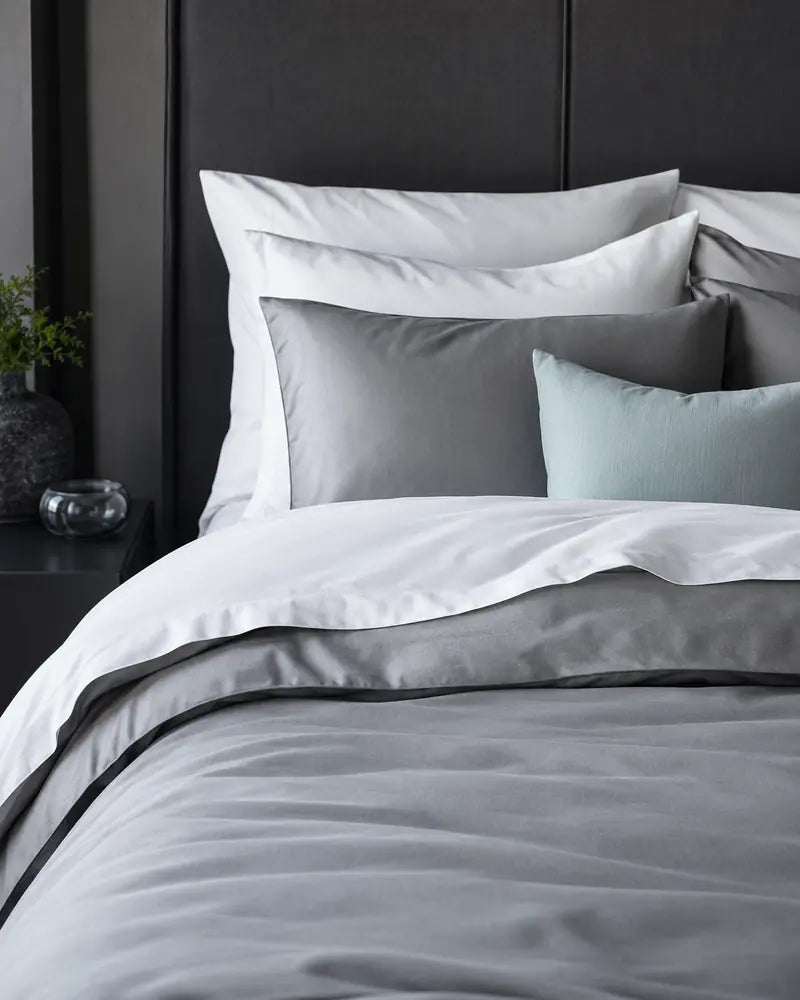
- Close-up of 200TC white polycotton percale fabric texture for hospitality use.
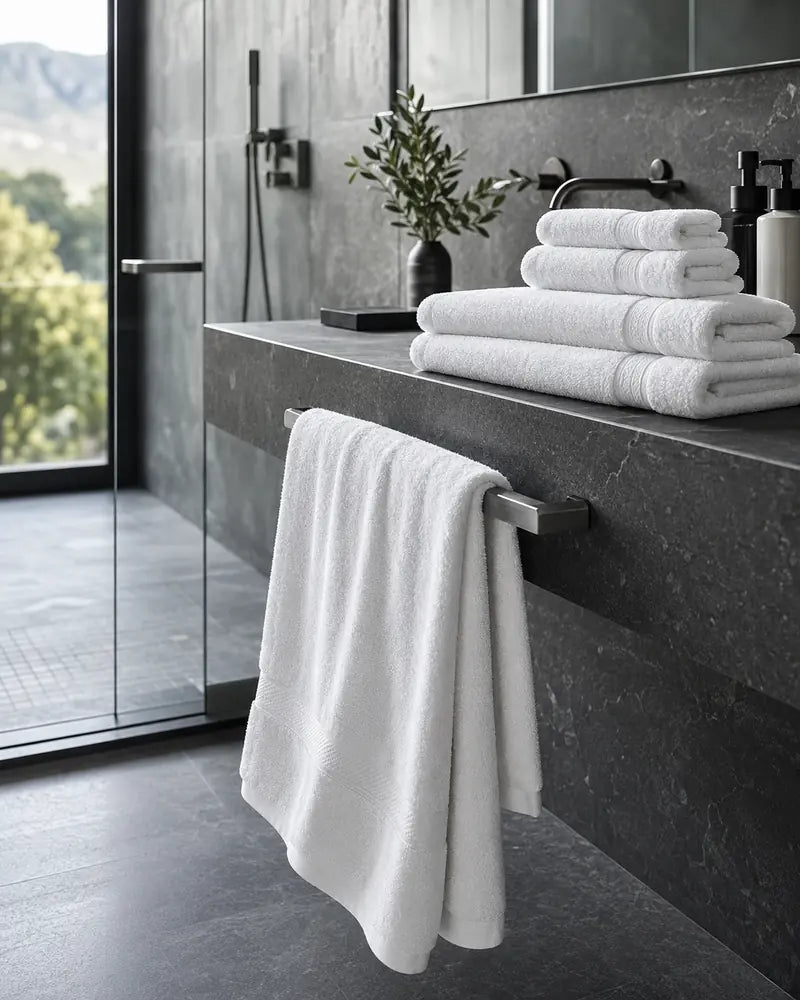
- Neatly folded hospitality towels with custom embroidered lodge logo in grey thread.
- Super King XL fitted sheet with four-corner elastic shown on a luxury hotel mattress.
- Artisanal South African textile manufacturing process in a local Edenvale factory.
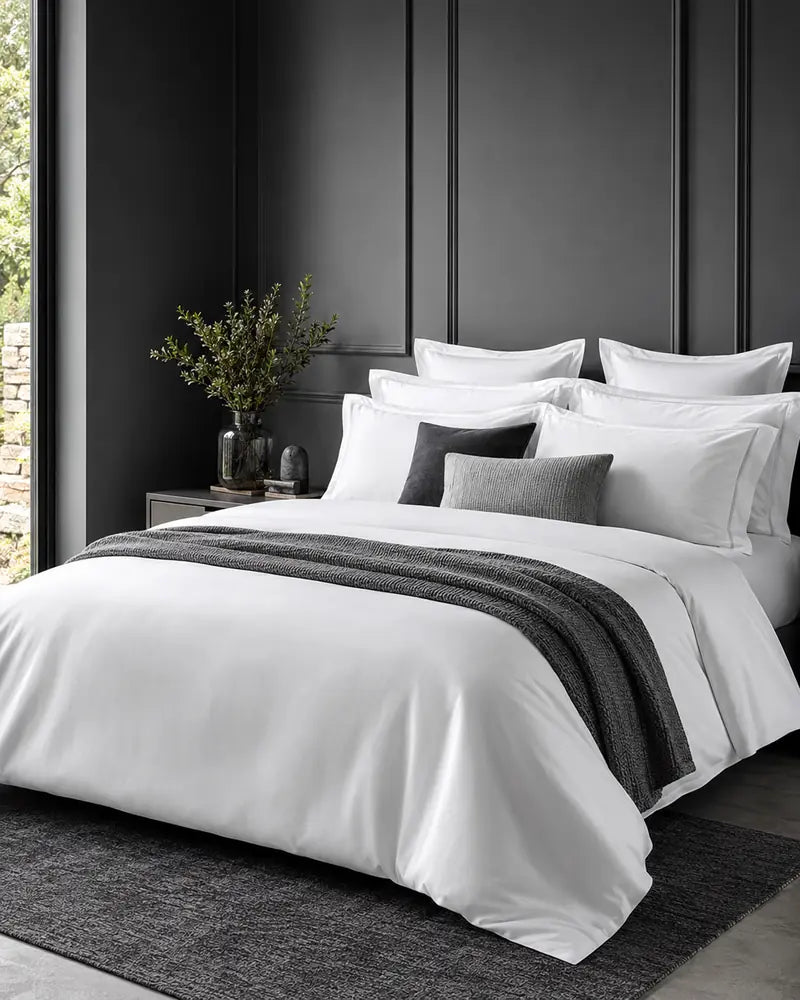
- Premium white 300TC cotton percale bedding set in a modern boutique hotel room.