

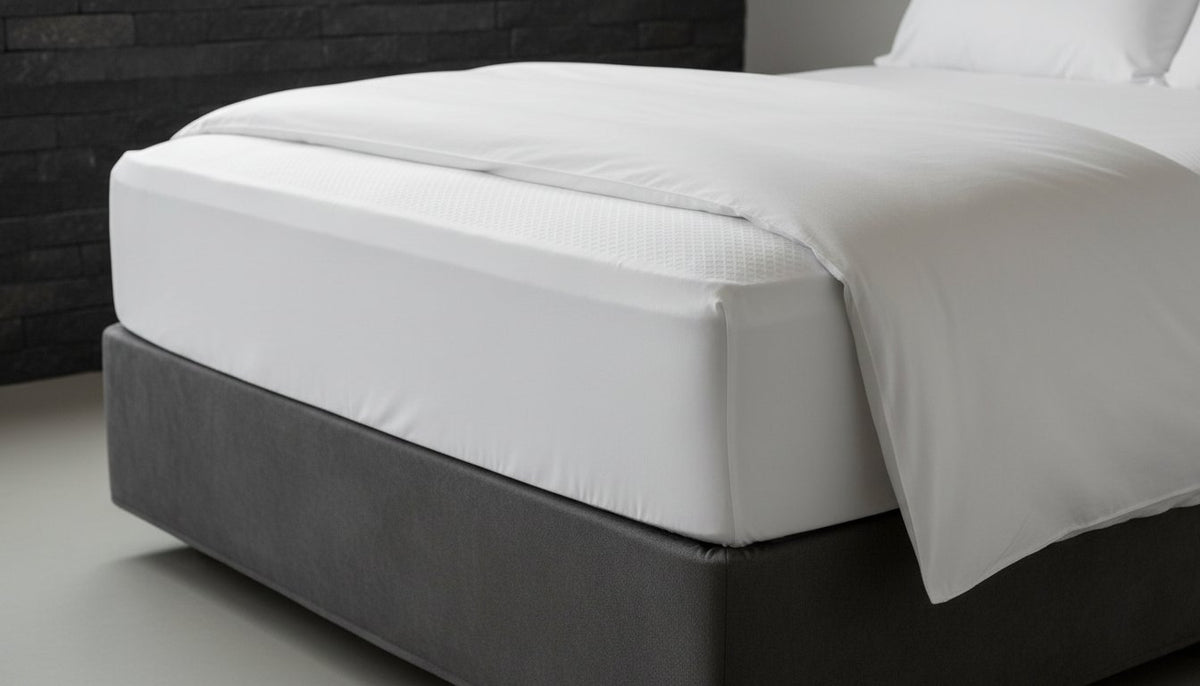
Mattress Cover Guide: Protecting Your Bedding Investment in 2026
With the global mattress protector market projected to reach $6.91 billion by 2035, professional hoteliers and discerning homeowners are no longer viewing bedding protection as a mere afterthought. You likely recognise that a high-quality mattress is a substantial capital investment that deserves meticulous care. However, the search for the perfect mattress cover often leads to products that feel like plastic or lose their shape after a single industrial wash. It's frustrating to invest in luxury beds only to have the guest experience compromised by rustling fabrics or ill-fitting protectors.
We agree that protection should be felt through its benefits rather than its presence. It's essential that your bedding remains breathable and silent to maintain the sanctuary of the bedroom. This guide promises to help you select a hospitality-grade mattress cover that enhances guest comfort whilst significantly extending the lifespan of your beds. We'll examine how to find the right fit for non-standard sizes like Super King XL and provide practical advice on maintaining hygiene standards without compromising the sensory experience of your room. From understanding commercial laundering requirements to selecting artisanal South African craftsmanship, you'll discover how to make an informed investment for your property.
Key Takeaways
- Understand how a hospitality-grade barrier protects against allergens and moisture to preserve the long-term integrity of your bedding investment.
- Learn to distinguish between the plush comfort of quilted layers and the impenetrable barrier of a waterproof mattress cover to suit your specific guest profile.
- Discover why 200TC Polycotton Percale remains the preferred workhorse for commercial laundering durability and guest breathability.
- Master the nuances of South African bed sizing to ensure a perfect, silent fit for industry-exclusive dimensions like Super King XL.
- Explore the operational advantages of choosing locally manufactured, made-to-order linens that are crafted specifically for the South African hospitality sector.
The Vital Role of a Mattress Cover in Professional Bedding Hygiene
In the quiet luxury of a well-appointed suite, the most critical elements are often those that remain unseen. A mattress cover serves as the essential, silent guardian of your bedding investment, providing a meticulous barrier against allergens, moisture, and the physical stresses of daily use. While residential options often focus on basic cleanliness, a professional-grade mattress protector is engineered to meet the rigorous demands of the hospitality industry. It's the primary defence layer that ensures your beds remain hygienic, fresh, and structurally sound over hundreds of guest turnovers.
The distinction between a standard cover and a technical protector lies in the performance. A true hospitality-grade mattress cover must balance two conflicting needs: it must be impenetrable to liquids and skin cells, yet entirely breathable for the sleeper. If a guest can hear the rustle of a protector or feel a heat-trapping plastic layer beneath the sheets, the sanctuary of the room is compromised. We believe that protection should be invisible. It's a technical necessity that, when executed correctly, enhances the sensory experience of the bed by providing a crisp, stable foundation for your linens.
Preserving Your Asset: The Financial Logic
Protecting your assets is a matter of strategic financial management. When a high-quality hospitality mattress can cost upwards of R20,000, a protector is a cost-effective insurance policy. Most major mattress manufacturers will void a warranty immediately if the ticking—the outer fabric of the mattress—shows signs of staining or moisture damage. By installing a durable cover, you ensure your warranty remains intact whilst avoiding the premature replacement costs that diminish your profit margins. For guesthouses and boutique hotels, maintaining high hygiene scores is vital. A pristine mattress surface is a non-negotiable requirement for top-tier industry certifications and positive guest reviews.
Home Sanctuary vs. Hospitality Suite
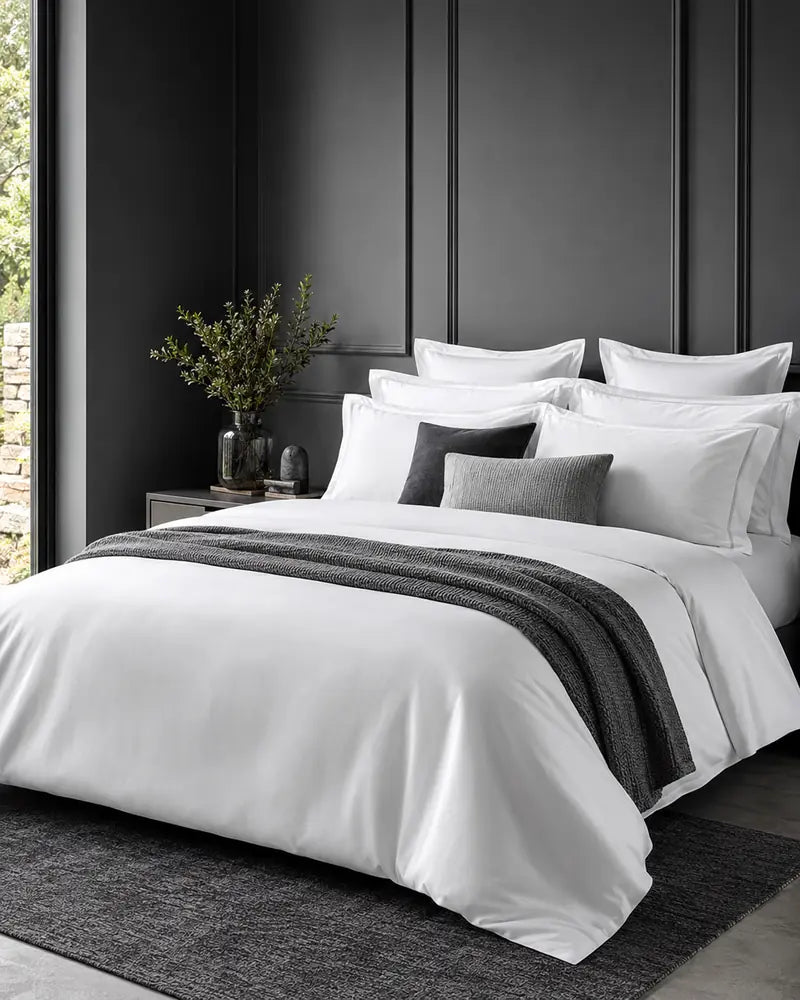
The myth that a protective layer must feel like crinkling plastic has been soundly debunked by modern textile science. Today’s hospitality-grade fabrics, such as our 200TC Polycotton Percale, offer a soft-touch finish that feels like a natural extension of the bedding. This is particularly important in the South African climate. Whether you’re managing a coastal lodge in the humid air of KwaZulu-Natal or a boutique hotel in the dry heat of the Karoo, a breathable barrier is essential. It prevents the growth of mould and mildew whilst ensuring guests don't wake up feeling clammy. We focus on creating a silent, artisanal layer that maintains the "everyday luxury" of a home sanctuary whilst providing the durability required for commercial laundering cycles.
Quilted vs. Waterproof Mattress Protectors: A Comparison for the Discerning Host
The Quilted Advantage: Softness and Airflow
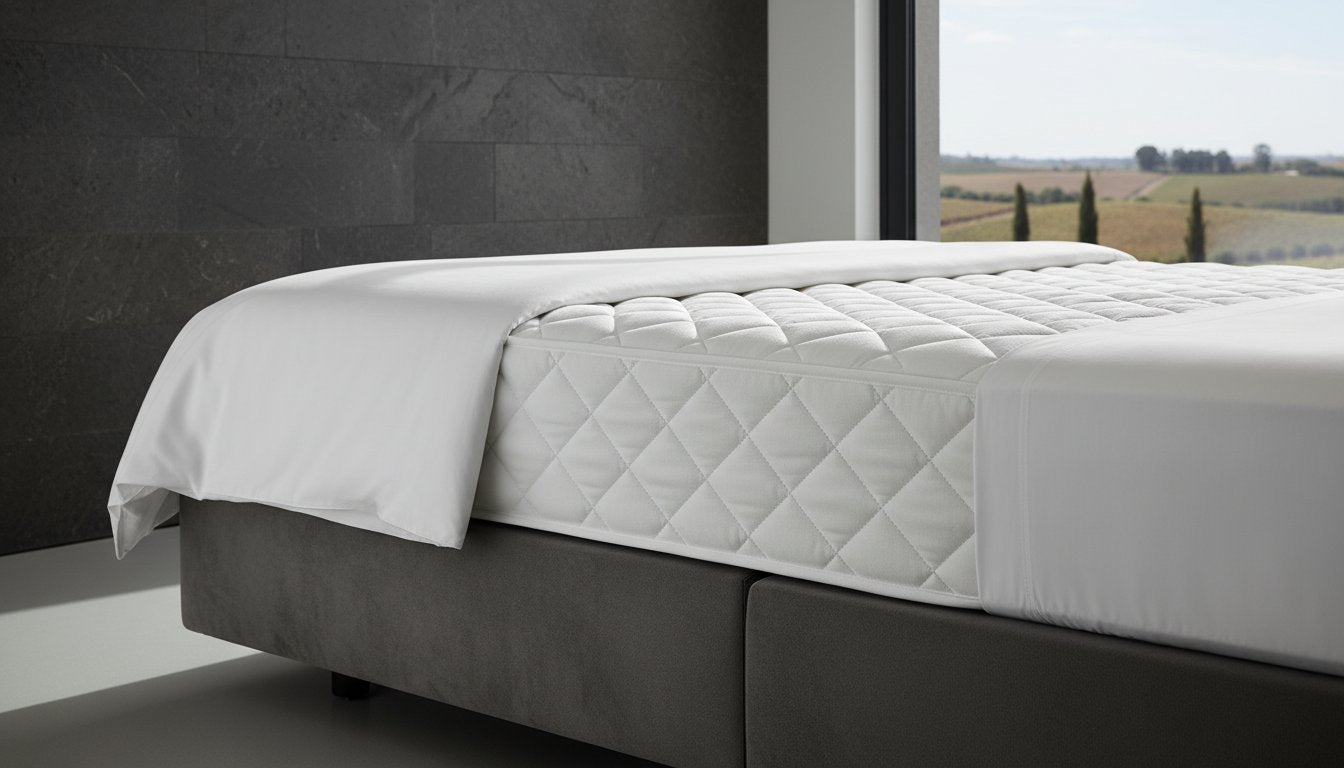
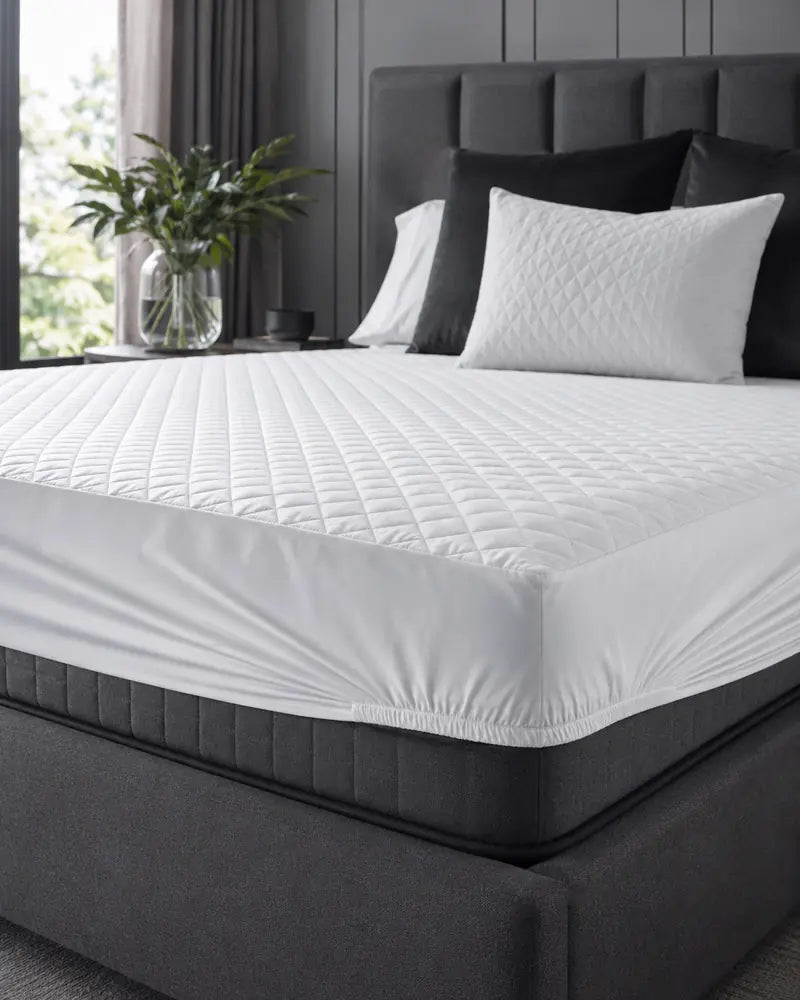
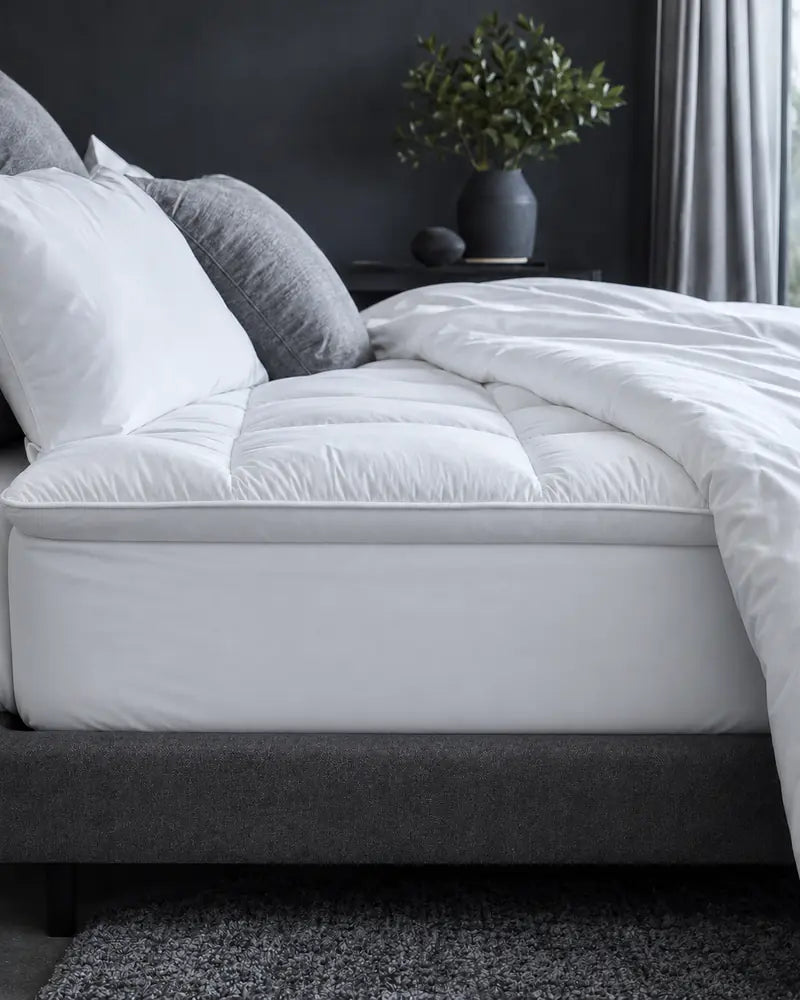
A quilted protector is often the preferred choice for luxury suites where the "cloud-like" feel of the bed is paramount. These covers feature a layered construction with a soft fill that adds a subtle loft to the mattress surface. This additional padding doesn't just enhance comfort; it also aids in temperature regulation by allowing air to circulate more freely between the guest and the mattress. Interior designers frequently favour these for boutique environments because they provide a plush, high-end aesthetic that feels deeply personal and welcoming. From a maintenance perspective, quilted items are resilient in a hospitality cycle, though they do require slightly longer drying times than their thinner counterparts.
Waterproof Protection: The Invisible Shield
For family lodges, self-catering units, or high-turnover establishments, waterproof protection is a non-negotiable asset. Modern textile technology has replaced the noisy, heat-trapping plastics of the past with sophisticated, breathable membranes. These technical layers are designed to be entirely silent, ensuring the guest remains unaware of the protection beneath them. When selecting a base layer, many establishments choose a hospitality-grade percale foundation to ensure the highest hygiene standards are maintained during industrial wash cycles. To preserve the integrity of the waterproof membrane, it's essential to avoid high-heat drying and harsh chemical bleaches, which can degrade the technical coating over time.
For those seeking ultimate peace of mind, a hybrid approach is often the most effective strategy. By layering a quilted protector over a waterproof mattress cover, you achieve the plush aesthetic of a five-star suite whilst maintaining a complete barrier against deep-set stains. This dual-layer method is particularly effective in South African coastal regions where humidity and high guest turnover demand extra vigilance. If you're unsure which combination best suits your property, you can request a consultation or fabric samples from our team. Our protectors are made-to-order with a lead time of 3–14 working days, ensuring that your investment is crafted with the meticulous care your establishment deserves.

Fabric Science: Why Hospitality-Grade Percale Outlasts Retail Alternatives
Choosing a mattress cover for a commercial environment requires a deeper understanding of textile engineering than a typical retail purchase. Whilst retail brands often focus on high thread counts to suggest quality, professional buyers know that durability is found in the weave. A 200TC Polycotton Percale is the undisputed workhorse of the South African hospitality industry. It's designed to withstand the rigorous friction of commercial laundering without the pilling or thinning often seen in value-conscious retail alternatives.
Thread count shouldn't be viewed merely as a marketing metric. In a professional setting, a count of 200 to 300 signifies a balanced density that allows for excellent breathability whilst maintaining the structural integrity of the fabric. Percale is a closely woven, plain-weave fabric known for its crisp feel and matte finish. This specific weave ensures that the mattress cover remains cool and refreshing for the guest, avoiding the clammy sensation associated with inferior, loosely woven textiles.
Polycotton vs. Pure Cotton: The Laundering Debate
Polycotton Percale is frequently favoured for its exceptional operational efficiency. Because it combines the strength of polyester with the softness of cotton, it dries significantly faster and requires minimal ironing. This makes it a highly cost-effective choice for lodges with high turnover. Conversely, 300TC White Cotton Percale offers an unparalleled luxury appeal for premium boutique establishments. Whilst pure cotton is naturally more prone to shrinkage, our meticulous manufacturing process accounts for these factors, ensuring a consistent fit even after multiple high-heat cycles.
Construction Details That Matter
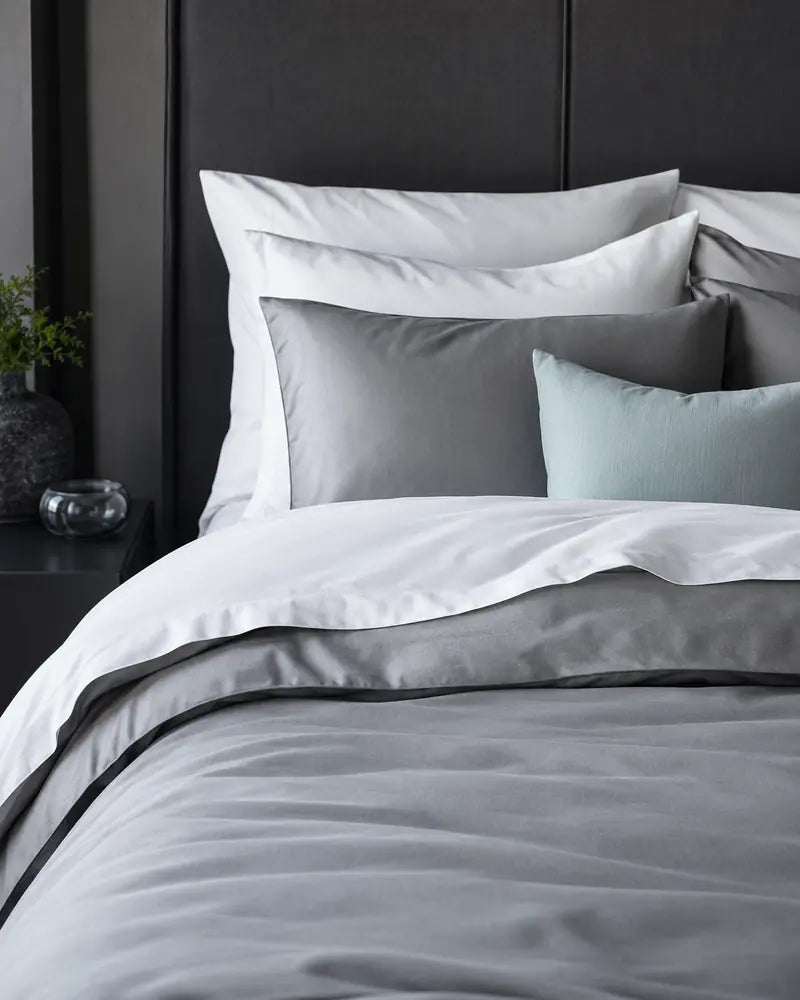
The longevity of a protector is often determined by the quality of its finish. We utilise commercial-strength stitching to prevent frayed edges, a common failure point in retail items subjected to industrial drying. A secure, 'no-shift' fit is guaranteed by our robust four-corner elastic, which keeps the cover taut regardless of guest movement. Aesthetics also play a role in maintenance; while White remains the standard for hygiene, our palette of Cream, Stone, Grey, and Duck Egg allows designers to align protection with the room's visual narrative. Every item is made-to-order with a 3–14 working day lead time, reflecting our commitment to South African craftsmanship and artisanal quality.
Sizing for the South African Bed: From Standard to Extra-Length XL
A frequent oversight in hospitality procurement is the assumption that a King size bed is a universal dimension. In the South African market, standard mattresses typically measure 188cm in length, but the luxury sector has seen a significant shift toward "Extra Length" (XL) variants that extend to 200cm. If you attempt to fit a standard mattress cover over an XL bed, the resulting tension often causes the elastic to snap or the corners to pop off during the night. This isn't just an operational nuisance; it compromises the physical barrier of the mattress and disrupts the guest’s sleep.
The Linen and Co Size Chart: A National Standard
We provide a comprehensive range of dimensions to ensure every bed in your establishment is perfectly protected. Our standard measurements follow the South African national guidelines:
- Single: 91 cm x 188 cm
- Three-Quarter: 107 cm x 188 cm
- Double: 137 cm x 188 cm
- Queen: 152 cm x 188 cm
- King: 183 cm x 188 cm
For modern lodges, the 200cm XL length is becoming the gold standard for guest comfort. We specialise in niche sizes that are often difficult to source, including 3/4 XL and the increasingly popular Super King XL (200 cm x 200 cm). Because our linens are made-to-order, we can accommodate bespoke requirements for non-standard lodge beds that don't fit traditional retail categories.
Ensuring a Snug Fit
A loose mattress cover is a liability in a professional setting. Excess fabric tends to bunch under the sheets, creating uncomfortable ridges that guests can feel throughout the night. Loose fabric is also subject to higher mechanical stress during guest movement, which leads to premature tearing. We recommend fitted-style covers over flat-sheet style protectors because they provide a secure, immobile barrier that stays taut even on "Extra Depth" mattresses. Luxury mattresses often measure between 35cm and 45cm in depth; to ensure a proper fit, measure from the top surface to the bottom of the mattress corner before placing your order. You can see our Duvet and Pillow Sizing Guide for a complete bedroom fit analysis.
Don't settle for ill-fitting protection that compromises your guest experience. If your property features non-standard dimensions or extra-deep pillow-top mattresses, we invite you to request a custom sizing consultation to ensure a flawless finish. Please remember that our items are meticulously crafted with a lead time of 3–14 working days, and full payment is required before we commence production on your bespoke order.
The Linen and Co Solution: Made-to-Order Excellence for Every Establishment
At Linen and Co, we believe that the foundation of a sanctuary lies in the meticulous details of its construction. Our commitment to South African craftsmanship ensures that every mattress cover is locally manufactured to meet the exact specifications of your property. Unlike mass-produced retail items that sit in warehouses for months, our made-to-order model guarantees that your linens are fresh, bespoke, and personally checked for quality before they leave our facility. This artisanal approach allows us to maintain a world-class standard of elegance whilst supporting local excellence.
Transparency remains a cornerstone of our professional relationship with hospitality buyers. We maintain clear timelines to help you organise your property's procurement cycles effectively. Artisanal production typically requires a lead time of 3–14 working days. This deliberate pace isn't a delay; it's a mark of quality. It ensures that every item, from a standard fitted sheet to a technical mattress cover, receives the attention it deserves. We don't believe in shortcuts. By controlling the manufacturing process from start to finish, we ensure that your investment provides years of reliable service in a commercial environment.
Customisation and Branding
Elevating your brand's presence often starts with subtle, personalised touches that create a lasting impression of quality. We offer custom embroidery options for our hospitality clients, allowing you to add a signature mark of excellence to your bedding. Please allow an additional 1–2 weeks for this specialised process. It’s vital to understand that once production has commenced on custom or branded items, they are non-returnable. This policy protects the integrity of our artisanal workflow and ensures that every piece of linen delivered to our clients is pristine and unique to their establishment.
Ordering with Confidence
Whether you’re furnishing a single luxury suite or a large-scale hotel, we provide personalised trade support without the barrier of minimum order requirements. This flexibility allows boutique guesthouses to access the same level of "everyday luxury" as international resorts. To maintain our production standards and ensure we can source the finest 200TC and 300TC fabrics for your order, we require full payment prior to the commencement of production. We invite you to request a bespoke quote or sample to experience our hospitality-first textiles first-hand. Our team is ready to assist with sizing, fabric selection, and customisation to ensure your bedding investment is protected for years to come.
Investing in Enduring Comfort
Selecting a mattress cover is a strategic choice that balances operational longevity with the sensory expectations of your guests. We've explored how hospitality-grade 200TC Percale outperforms retail alternatives and why precise sizing, including Super King XL, is non-negotiable for a silent, secure fit. By choosing locally manufactured protection, you aren't just buying a product; you're investing in a partnership that values South African craftsmanship and meticulous attention to detail.
Our made-to-order model ensures your linens are bespoke and fresh, with artisanal production lead times of 3 to 14 working days. Whether you manage a boutique guesthouse or a large hotel, we support your vision with no minimum order requirements and personalised trade support. We invite you to Request a Professional Quote for Your Hospitality Linen to begin refining your guest experience. We look forward to helping you create a sanctuary where every layer is crafted for life.
Frequently Asked Questions
What is the difference between a mattress cover and a mattress protector?
A mattress cover acts as a general protective layer for the bed's surface, whilst a technical protector specifically guards against moisture, allergens, and bed bugs. In our professional range, we prioritise hospitality-grade construction, meaning every item provides a robust barrier without compromising the soft, sensory feel of your premium linens.
Can waterproof mattress covers be washed in a commercial laundry?
Yes, our waterproof protectors are engineered to withstand the rigours of industrial laundering. You should wash them at temperatures up to 60 degrees Celsius; however, it's vital to avoid high-heat tumble drying. Excessive heat can degrade the breathable waterproof membrane, so we recommend a medium-heat cycle or air drying where possible.
How often should I replace the mattress covers in my guest house?
We recommend replacing your protectors every 24 to 36 months in a high-turnover hospitality environment. Even with meticulous care, the elastic and technical coatings eventually degrade after approximately 100 industrial wash cycles. Regular audits of your mattress cover stock help maintain your hygiene ratings and guest comfort scores.
Do your mattress covers fit extra-depth mattresses (35cm+ pockets)?
Every mattress cover we manufacture can be customised to fit extra-depth mattresses of 35cm, 40cm, or even 45cm. Standard retail items often fail on luxury pillow-top beds common in South African lodges. We encourage you to provide your specific depth measurements during the quoting process to ensure a secure, no-shift fit.
Is a 200 thread count polycotton percale cover breathable enough for summer?
200TC Polycotton Percale is exceptionally breathable and remains the preferred choice for South African summer conditions. The plain-weave percale structure allows for maximum airflow between the fibres. This prevents the heat-trapping effect often associated with lower-quality synthetic fabrics, ensuring your guests stay cool and comfortable throughout the night.
What happens if I need a custom size that isn't listed on the website?
Since our items are made-to-order in our local facility, we can manufacture any bespoke size your establishment requires. If your property uses non-standard dimensions or 3/4 XL beds, simply contact our trade support team for a personalised quote. Our standard lead times of 3–14 working days still apply to these custom orders.
How do I care for my mattress cover to ensure it doesn't shrink?
To prevent shrinkage, wash your linens at 40 to 60 degrees and remove them from the dryer whilst they are still slightly damp. Avoid using the "bone-dry" setting in commercial dryers. Excessive heat is the primary cause of fibre contraction, so a gentle drying approach preserves the original dimensions and artisanal quality of the fabric.
Why should I choose locally manufactured linen over imported alternatives?
Choosing locally manufactured linen ensures superior quality control and directly supports South African craftsmanship. Local production allows us to offer industry-exclusive sizes and custom embroidery with a reliable 3–14 working day lead time. Imported retail alternatives often lack the reinforced stitching and fabric density required for frequent commercial laundering.