

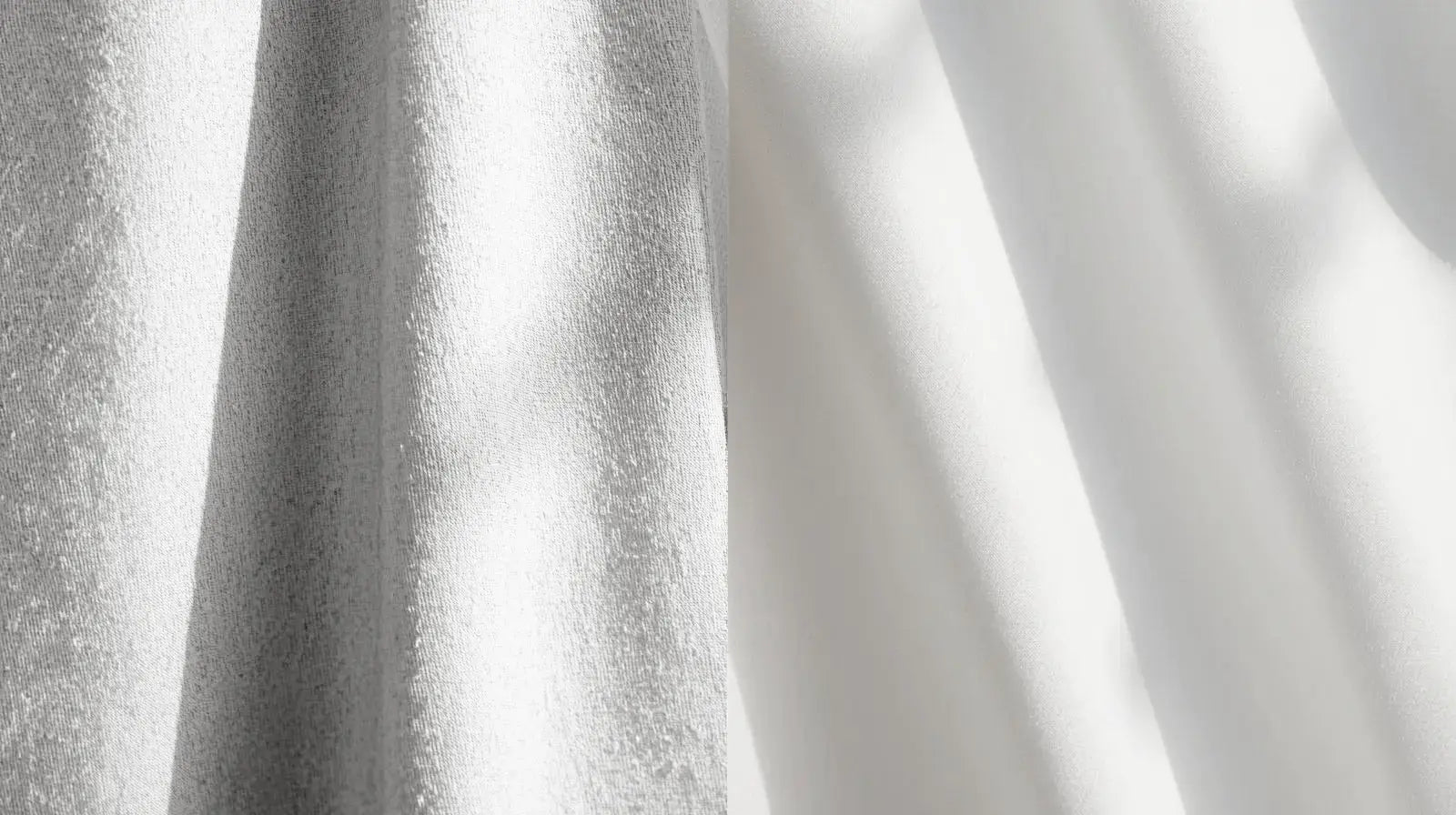
Why 'Soft Touch' Microfibre Is a Hospitality No-Go
Walk into any linen trade show and you'll find microfibre sheeting marketed as "soft touch", "hotel quality", and "easy care". It feels smooth in your hand, it's priced attractively, and the sales pitch is compelling. But put it through a commercial laundry at 60°C–90°C a few hundred times and the picture changes entirely.
Here's why microfibre is a no-go for hospitality — and what to specify instead.
It Degrades Fast in Commercial Laundry
Microfibre is a synthetic fabric made from ultra-fine polyester or polyamide fibres. Those fine fibres are what give it the initial soft feel — and they're also what makes it unsuitable for the conditions of commercial laundering.
At the temperatures required to meet hospitality hygiene standards (60°C–90°C), microfibre fibres break down progressively. Within 50–100 wash cycles, most microfibre sheeting begins to pill, lose its surface texture, and develop a dull, worn appearance. In a domestic setting where sheets are washed weekly, that's a year or two. In a high-turnover hospitality property washing linen daily, it's weeks.
It Can't Be Laundered at Hygiene Temperatures
This is the critical issue. TGCSA grading standards and basic hospitality hygiene protocols require linen to be laundered at temperatures that effectively eliminate bacteria and pathogens. Most microfibre fabrics are rated to a maximum of 40°C–60°C — and even at the lower end of that range, repeated high-temperature washing accelerates fibre breakdown significantly.
Cotton and polycotton percale, by contrast, are engineered to perform at 60°C–90°C wash after wash — which is exactly why they are the industry standard for commercial hospitality linen.
It Traps Oils and Bacteria
The same ultra-fine fibre structure that makes microfibre feel soft also makes it highly absorbent of oils, skin cells, and bacteria. In a cleaning cloth, that's a feature. In a bed sheet, it's a hygiene liability. Microfibre is notoriously difficult to rinse clean thoroughly — residues accumulate in the fibres over time, and standard commercial detergents are less effective at breaking them down than with natural or blended cotton fabrics.
It Looks Wrong in the Room
Microfibre has a characteristic sheen and drape that reads as synthetic — and guests notice. It photographs poorly, it doesn't press to a crisp finish, and it lacks the clean, matte presentation that percale delivers. For any property where room photography matters — and in the age of online reviews and booking platforms, all of them do — microfibre undermines the visual standard you're trying to set.
The Environmental Argument Against It
Every wash cycle releases microplastic fibres into the water system. For hospitality properties washing linen at commercial volumes daily, the cumulative microplastic load is significant. As sustainability expectations from guests and grading bodies increase, specifying synthetic microfibre linen is increasingly difficult to justify.
What to Specify Instead
The right alternative depends on your property type and operational setup:
- For most hospitality properties: Polycotton Percale 200TC — wrinkle-resistant, fast-drying, dimensionally stable, and built for commercial laundry. Our first recommendation for 1–3 star properties and high-turnover environments.
- For 4–5 star properties: Cotton Percale 300TC — premium hand-feel, crisp presentation, and consistent performance across hundreds of commercial wash cycles.
Not sure which fabric is right for your property? See our guide to percale fabric types or contact us directly.
Talk to Us

Written by Dawn Gee